Packaging is a brand signal, not a container
For most physical products, the packaging is the moment of peak expectation. The customer has paid, waited, and opened the box. What they see is either a confirmation that the brand delivered on its promise — or a quiet disappointment that doesn't match the product inside.
That mismatch compounds. A premium product in a cheap box feels overpriced. A mid-priced product in thoughtful packaging feels considered. Packaging is a signal, not a cost line — and it should be designed for the perception it creates, not the smallest box that fits.
The three packaging tiers
Most business packaging falls into one of three tiers. The tier should match the product price, not the founder's budget.
- Functional (low cost): plain kraft or unbranded box with a branded sticker and insert card. Right for mid-priced products where the product itself carries the brand.
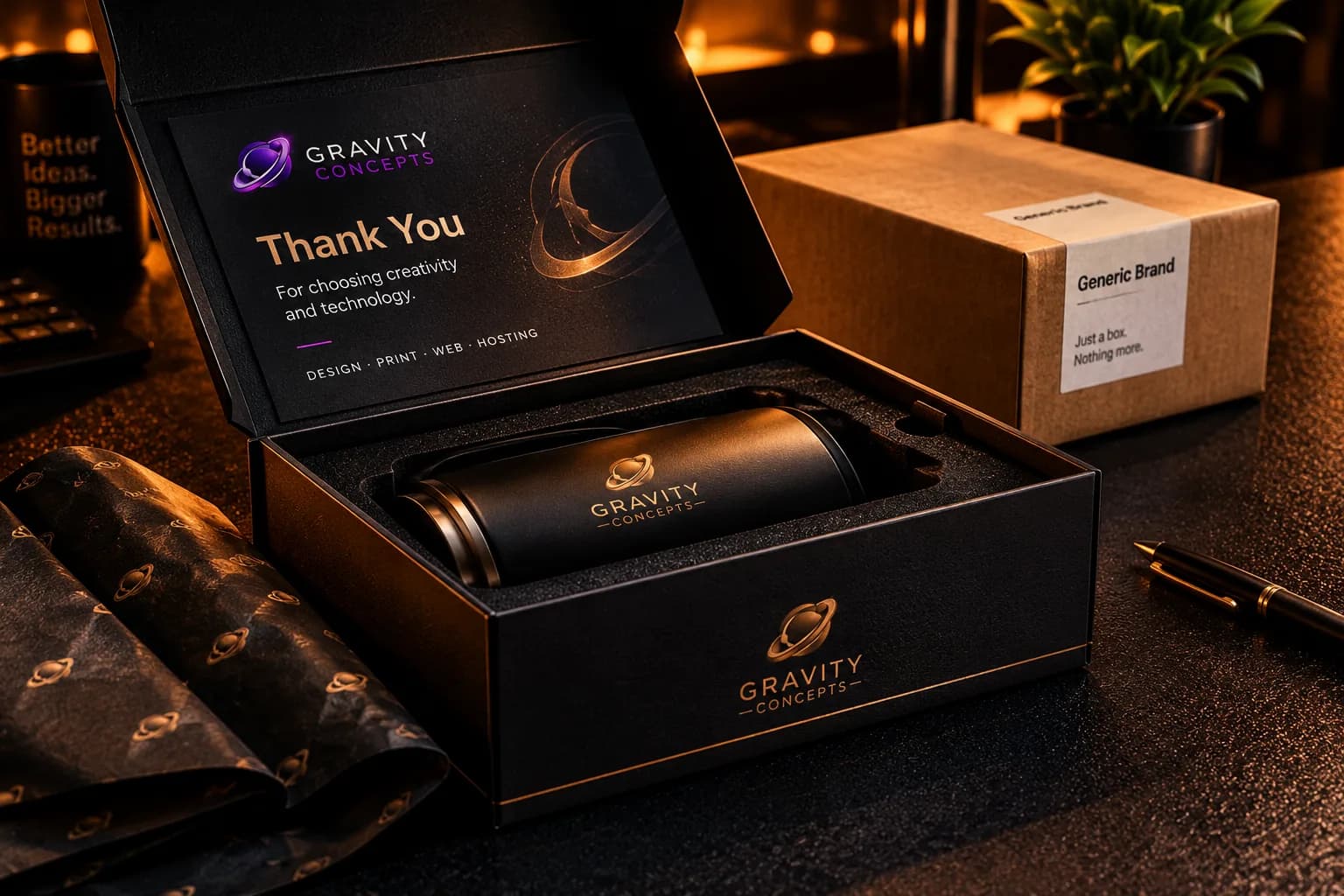
- Considered (mid cost): printed mailer or rigid box with logo, contact details, and a short brand message. Right for premium-mid products where unboxing matters.
- Premium (high cost): structural packaging, tactile finishes, custom insert design, and secondary printed collateral. Right for high-ticket products where the unboxing is part of the value.
What to specify before print
Before sending packaging to production, confirm the same pre-press essentials as any print job — with these packaging-specific additions:
- Exact dimensions including product tolerance (a too-tight box tears on opening).
- Print finish (matte, gloss, soft-touch) — packaging finish often matters more than card finish.
- Tactile elements (emboss, spot UV, foil) if the product is premium enough to warrant them.
- Insert card design and printed collateral — the piece the customer keeps.
When not to bother with custom
If the product is mid-priced or high-volume-and-cheap, custom packaging rarely pays back. A well-printed sticker on a plain box, paired with a small branded insert card, usually outperforms an elaborate box at that price point. Packaging should scale with what the customer paid — anything more looks suspicious, anything less looks careless.
Frequently asked
Do I need custom packaging?
Only if the product is premium enough that generic packaging undercuts the price. For most mid-priced products, a branded sticker plus a small insert card on a plain box delivers the same brand signal at a fraction of the cost.
What's the minimum viable packaging for a small run?
A plain kraft box, a printed brand sticker, and a small branded insert card with contact details and one line of brand message. That covers the perception job without any custom box production.
Should packaging match the product photo?
Yes. If the product is sold online, the actual packaging should match what's shown in the marketing imagery. Mismatches between photos and reality are the most common source of negative reviews.
Ifeanyi Ejidike
Creative Director & Lead Engineer, Gravity Concepts
Writes from real client work — branding, print, and production-grade web builds for ambitious businesses.
Want us to handle this for you?
Design, print, web builds, and ongoing maintenance — fast response, direct communication.