What GSM actually means
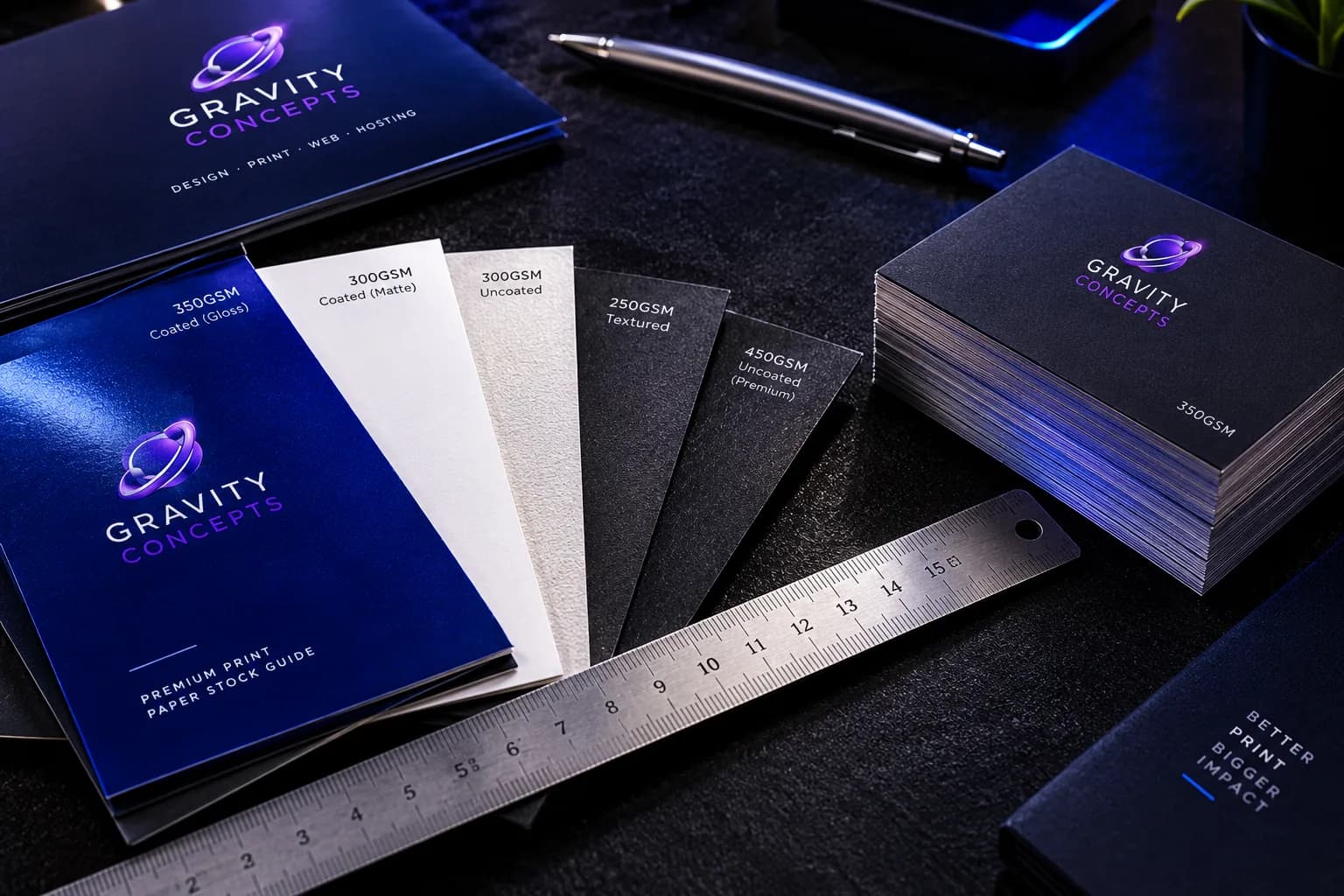
GSM stands for grams per square meter — the weight of the paper. Higher GSM means heavier, thicker paper. It doesn't mean better paper; it means the paper will feel more substantial in hand, hold more ink without warping, and print with more definition.
Common ranges: 90–130gsm is standard for flyers and everyday brochures. 170–200gsm is a mid-weight option for posters and covers. 300–350gsm is standard for premium business cards and rigid mailers. 400gsm+ is used for high-end cards and luxury packaging, though at that weight some stocks begin to crack on folds.
Coated vs uncoated
Coating changes how ink interacts with the paper surface. It's the second decision after GSM, and it changes the feel as much as the weight.
- Coated: smooth, sealed surface. Colors sit brighter and images look sharper. Good for photo-heavy brochures, magazines, and marketing materials where color accuracy matters.
- Uncoated: natural paper texture. Ink absorbs into the fiber, so colors read softer. Good for business cards, letterheads, and any print where the paper is meant to feel tactile.
- Matte coated: a middle option — smooth enough for sharp images, less reflective than gloss. Often the safest default.
What to pick for common jobs
A short cheat sheet for the most common print jobs:
- Business cards: 300–350gsm, matte coated or uncoated. Soft-touch lamination for premium feel.
- Flyers: 130–170gsm, gloss or matte coated. Heavy enough to hold shape, light enough to fold.
- Brochures: 130–170gsm for inner pages, 250–300gsm for covers.
- Packaging inserts: 200–300gsm, uncoated or matte. Matte holds better against handling.
- Posters: 150–200gsm, gloss or matte. Gloss for indoor display, matte for high-handling environments.
The mistake to avoid
The most common mistake is picking paper by color and ignoring weight. A 90gsm flyer in a beautiful design still feels flimsy in hand, and a client will notice that before they notice the design. Weight is the first filter; color comes second. If the budget can only afford one upgrade, upgrade the weight before the finish.
Frequently asked
What GSM is a good business card?
300–350gsm is standard for premium business cards. Anything thinner reads as cheap in hand. Anything heavier than 400gsm can be difficult to stack and may crack on folds.
Is thicker always better?
No. Thicker is better when the print is meant to be substantial — cards, mailers, packaging. For brochures and flyers, thick paper is expensive and doesn't improve the outcome. Match weight to function.
Is gloss or matte better for brochures?
Gloss if the brochure relies on photography and needs bright, saturated colors. Matte if the brochure will be handled heavily or read under harsh lighting — gloss creates glare that makes text harder to read.
Ifeanyi Ejidike
Creative Director & Lead Engineer, Gravity Concepts
Writes from real client work — branding, print, and production-grade web builds for ambitious businesses.
Want us to handle this for you?
Design, print, web builds, and ongoing maintenance — fast response, direct communication.