
Your landing page should push one action
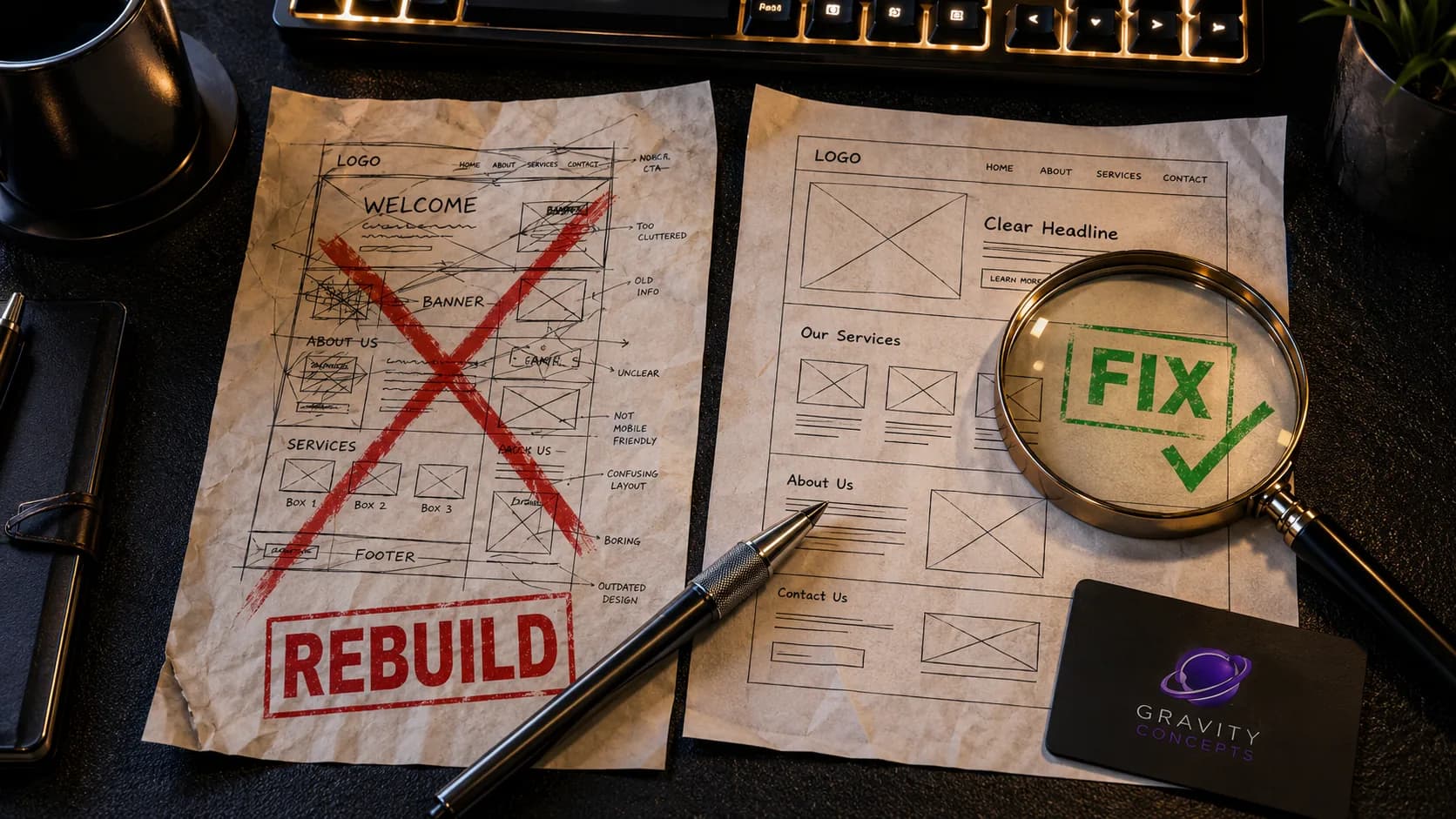
A landing page is not a full website. It is a focused page with one primary goal: enquiry, quote request, booking, or purchase. Too many options create hesitation and reduce conversions.
The five blocks that work
Use this flow to reduce confusion, build trust, and move people to action.
- Headline: what you do and the outcome.
- Subtext: who it's for and quick reassurance.
- Proof: portfolio, testimonials, real outcomes.
- Offer: benefits, process, and FAQ to remove objections.
- CTA: repeated at every decision point.
Trust signals that matter most
For serious buyers, trust is everything. Make it easy to verify you're real, responsive, and selective.
- Visible phone or WhatsApp contact.
- Portfolio with real examples.
- Clear response-time promise.
- Transparent scope and pricing range where possible.
Frequently asked
How long should a landing page be?
Long enough to answer the buyer's objections and short enough that the CTA is never more than two scrolls away. Most effective pages are 3–6 sections.
Should a landing page have a navigation menu?
Usually no. A landing page works because it removes exits. Keep navigation minimal or absent so the only action is the primary CTA.
Ifeanyi Ejidike
Creative Director & Lead Engineer, Gravity Concepts
Writes from real client work — branding, print, and production-grade web builds for ambitious businesses.
Want us to handle this for you?
Design, print, web builds, and ongoing maintenance — fast response, direct communication.