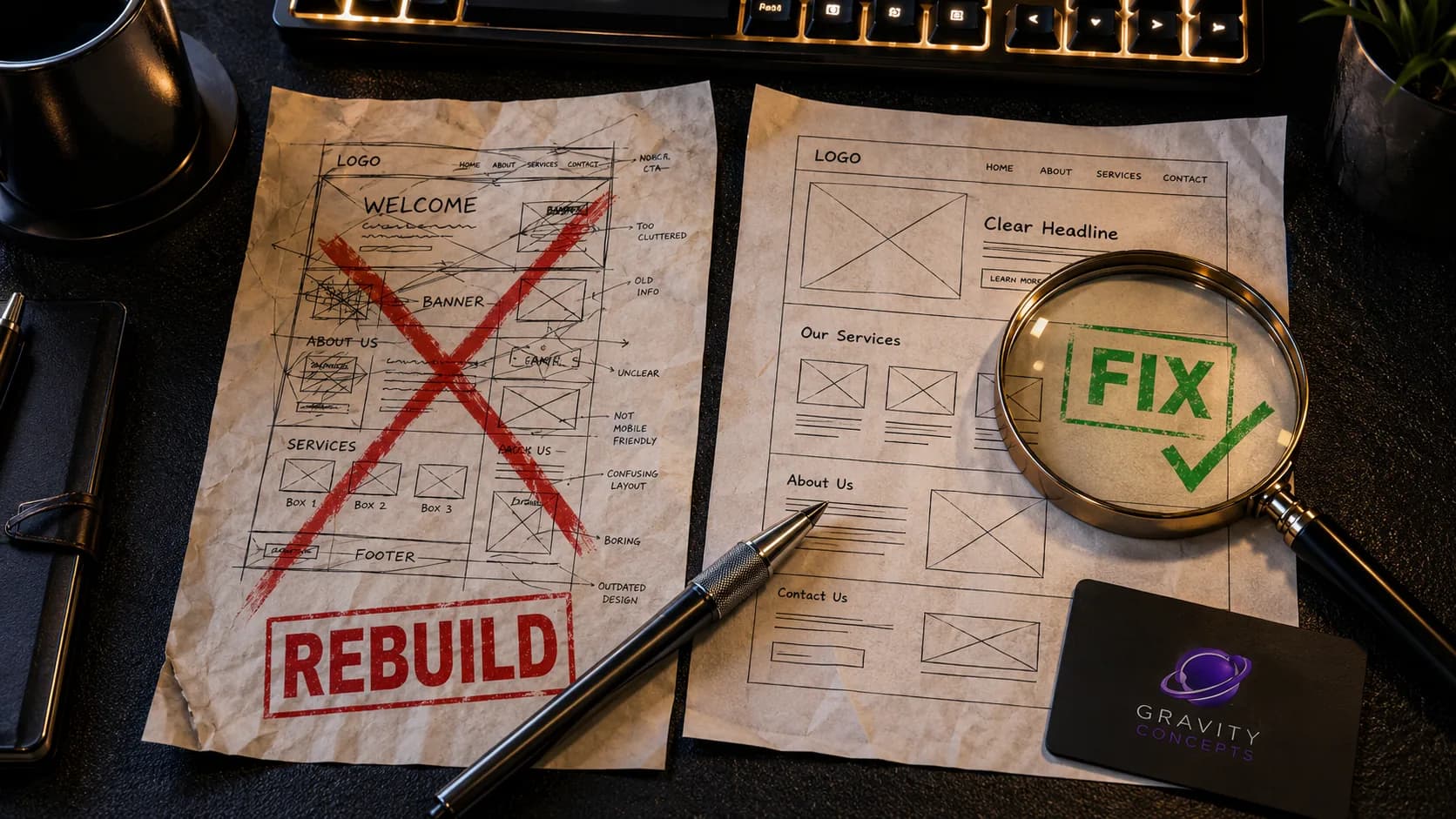

Most websites aren't failing at design. They're failing at structure.
A website can look premium and still lose enquiries. When traffic is steady and enquiries are low, the problem is almost never aesthetics. It is one of five structural failures.
1. The enquiry path is buried
If a visitor cannot see how to take the next step within the first two scrolls, the site is asking them to work. Most won't. The CTA should be above the fold, repeated at every decision point, and never competing with three other calls to action.
2. The site is slow where it matters
Speed isn't a nice-to-have. A slow hero, a heavy form, or a page that shifts while loading all cost enquiries. The first impression is the load, not the design. If the site feels unstable, users don't trust it.
3. Trust signals are missing or generic
Serious buyers look for proof before they commit. A portfolio with real outcomes, testimonials with attribution, and a clear response time do more than a wall of logos. Generic trust badges do nothing.
4. Mobile is treated as a smaller desktop
Most traffic is mobile. If the form is tiny, the navigation is confusing, or the CTA is hidden behind a hamburger menu, the site is failing the majority of visitors. Mobile isn't a breakpoint — it's the primary experience.
5. The site has no path beyond the homepage
A homepage without structure sends visitors back to search. A clear path — home → service → proof → enquiry — is what turns a visitor into a conversation. Without it, the site is a brochure, not a business asset.
How to find out if your site has these problems
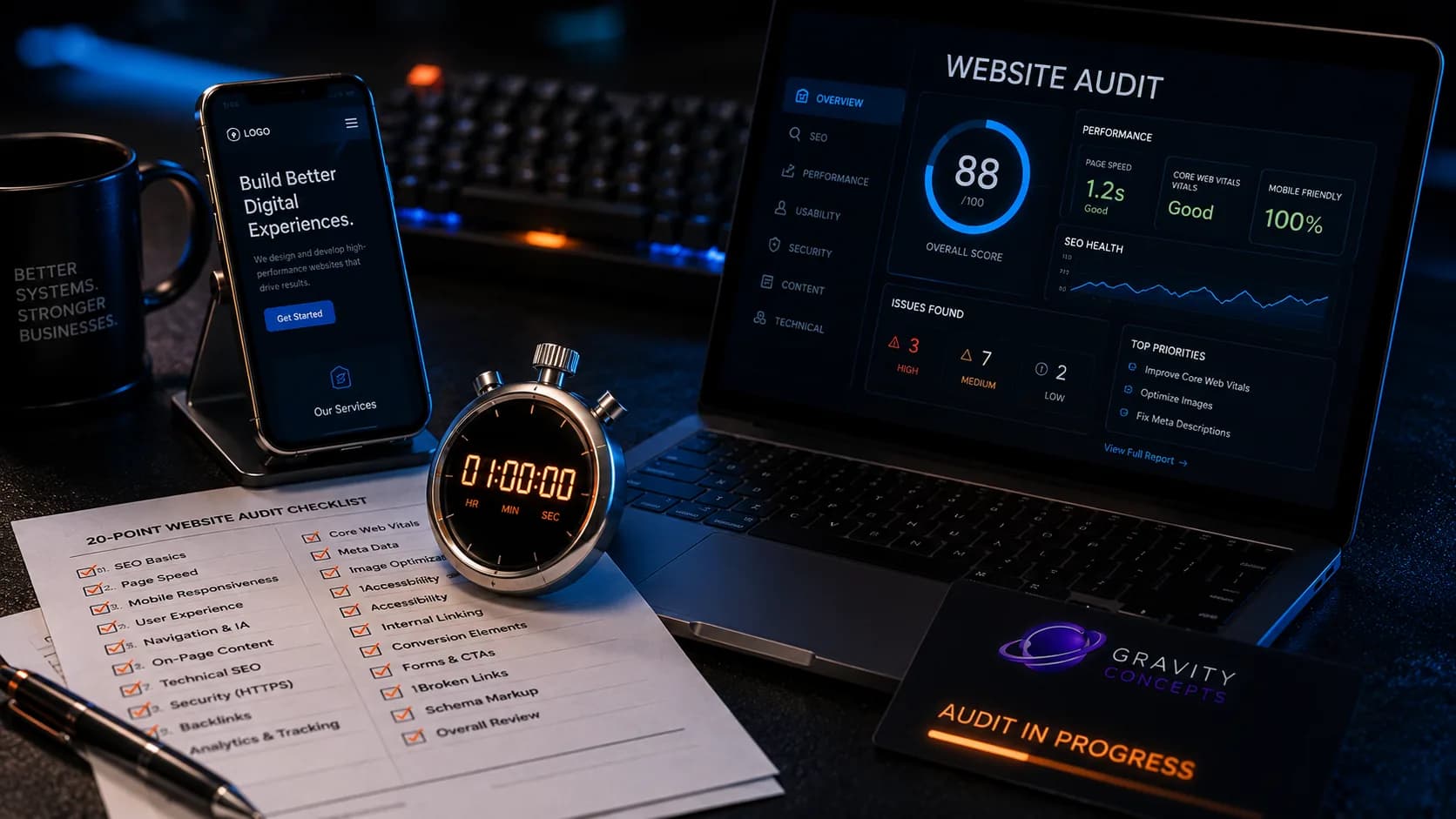
Run a structured audit. Check load time, CTA placement, mobile form behaviour, trust signals, and the enquiry path. If you want an outside read, send the link and we'll show you exactly where the site is losing enquiries.
Frequently asked
What is the single biggest reason websites lose enquiries?
The enquiry path. If the CTA is buried, competing, or missing above the fold, the site is asking visitors to work to contact you. Most won't.
How fast should a business website load?
Core Web Vitals are the baseline. The hero should load in under 2.5 seconds on mobile data, and the layout should not shift after load.
How many CTAs should a page have?
One primary CTA, repeated at decision points. Competing CTAs dilute the action. Two is acceptable if one is clearly secondary.
Ifeanyi Ejidike
Creative Director & Lead Engineer, Gravity Concepts
Writes from real client work — branding, print, and production-grade web builds for ambitious businesses.
Want us to handle this for you?
Design, print, web builds, and ongoing maintenance — fast response, direct communication.